Ajaccio: Granite Wine from Corsica's West Coast
Ajaccio shares standalone AOC status with Patrimonio and Muscat du Cap Corse. The island's other appellations, Calvi, Sartène, Figari and Porto-Vecchio, are geographical denominations attached to the regional Vin de Corse AOC.
Located on the island's west coast, in Corse-du-Sud, it stretches from the Gulf of Porto in the north down to the Gulf of Valinco in the south, across roughly 230 hectares of hillside vines. The AOC became standalone in 1984, after previously being known as Coteaux-d'Ajaccio from 1976.
At Infinivin, the standout local names have been selected, led by Domaine Comte Peraldi and Domaine de Vaccelli.
From the Gulf of Porto to the Gulf of Valinco
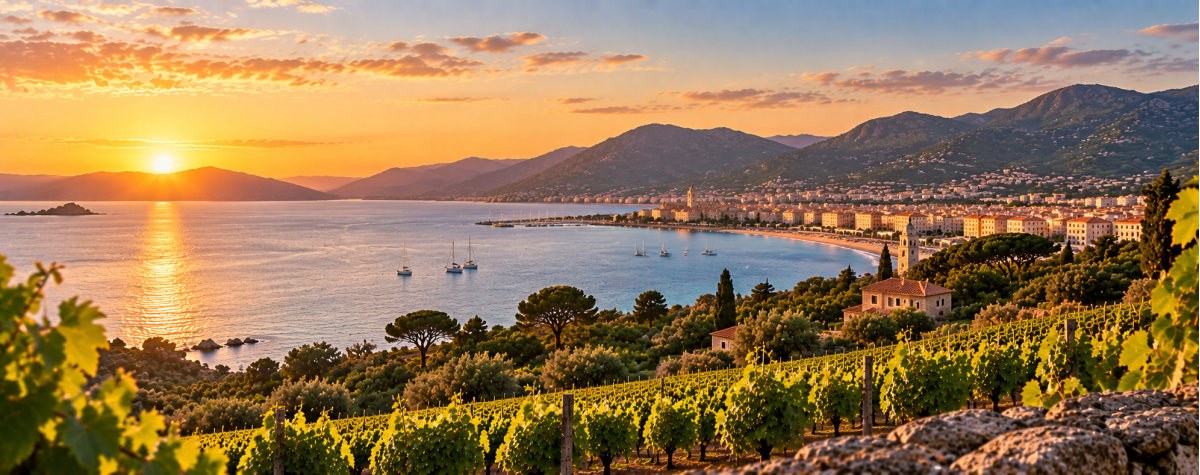
The appellation spans close to 40 communes in Corse-du-Sud, around the city of Ajaccio. The landscape shifts between steep hillsides, valleys opening onto the sea and nearby mountains. The vines are planted up to around 350 metres in altitude on soils that are mostly granitic, well-drained and poor, with a few pockets of limestone, sand and clay. The climate is Mediterranean, with some of the highest sunshine hours in Corsica (over 2,700 hours a year), tempered by steady winds (the Maestrale, Libeccio and Tramontane) and the proximity of the sea. This balance of heat, ventilation and poor soils is what shapes the finesse of the wines.
Sciaccarellu: The Appellation's Signature Grape
Ajaccio red and rosé wines must contain at least 60% Sciaccarellu, a native grape believed to have originated in the Ajaccio area. Recognisable by its powdery, crisp-fleshed berries, it produces pale-coloured reds with aromas of almond, blackcurrant, liquorice, red fruit and spice, and fine tannins. It's blended with grapes such as Nielluccio, Cinsault, Grenache or Barbaroux. For whites, the appellation relies mainly on Vermentinu (Corsican Malvoisie), which produces floral, mineral and aromatic wines.
Silky Reds, Lively Rosés and Floral Whites
The appellation produces red, white and rosé wine.. The reds stand out for their pale colour and refined profile, with aromas of almond, blackcurrant, liquorice and tobacco. Their cellaring potential runs from 5 to 10 years under good conditions, and longer for the top cuvées. The rosés play on freshness and fruit, with notes of rose, cherry and citrus. The whites, rarer in volume, are floral and mineral, marked by Vermentinu's acacia, hawthorn and citrus notes.
The Ajaccio Wine Selection
The cellar highlights two leading names of the appellation. Domaine Comte Peraldi, set on the heights of Ajaccio in Mezzavia, was founded by Louis de Poix, a co-founder of the Ajaccio AOC. It covers 50 hectares farmed organically and sustainably on granitic soils. Domaine de Vaccelli offers a more contemporary take on the appellation, with cuvées named Quartz (white), Granit (red) and Unu, which highlight the relationship between the grape and the bedrock.
Food Pairings
Ajaccio red pairs well with Corsican charcuterie (figatellu, coppa, lonzu), roasted meats, feathered game and aged cheeses. The white goes with seafood, grilled fish and Corsican cheeses. The rosé suits Mediterranean cuisine, grilled dishes and works well across a full meal.
Frequently Asked Questions
What's the main grape variety in Ajaccio wines?
Sciaccarellu for reds and rosés, at a minimum of 60%. Vermentinu for whites. Sciaccarellu is a native grape believed by ampelographers to have originated in the Ajaccio region.
What's the difference between Patrimonio and Ajaccio?
Both are cru appellations of Corsica, but they rest on different grape varieties and terroirs. Patrimonio, in the north of the island, favours Niellucciu for reds and rosés, on limestone and schist soils. Ajaccio, on the west coast, favours Sciaccarellu, on mostly granitic soils. Each appellation has its own style and identity.
What exactly is Sciaccarellu?
Sciaccarellu is a native red grape from Corsica, whose name comes from the Corsican word "shjaccà", meaning "crunchy", a reference to the crisp flesh of its powdery berries. Its historical home is the area around Ajaccio, where it has been grown for centuries. It produces red and rosé wines recognisable by their pale colour and aromas of almond, blackcurrant, liquorice and spice. It's grown almost nowhere else in the world outside Corsica.
Why are Ajaccio reds so pale in colour?
Sciaccarellu naturally has little colouring matter in its skins, which gives wines a light ruby red, sometimes described as "onion skin" on the finest cuvées. Its quality isn't measured by colour intensity but by aromatic precision, tannin finesse and length on the palate.
Is Sciaccarellu always blended with other grapes?
The appellation rules require a minimum of 60% Sciaccarellu for Ajaccio reds and rosés, blended with complementary grapes such as Nielluccio, Cinsault or Grenache. Some cuvées, however, choose to vinify Sciaccarellu at 100%, to explore the grape's pure character. These are often identified by the grape's name or by that of a historic plot.
Filters
Sort
Top Wines estates


