


- PROMO -15%
- BIO
Corsica Sartène is one of five geographical denominations attached to the Vin de Corse AOC, alongside Calvi, Figari, Porto-Vecchio and Coteaux du Cap Corse. It has been recognised since 1976 and showcases the wines produced around Sartène, in the south of Corsica. Corsica Sartène sits alongside the island's three stand-alone AOCs: Patrimonio, Ajaccio and Muscat du Cap Corse.
Corsica Sartène was the first Corsican wine to earn an official quality label. The appellation was granted VDQS status (Vin Délimité de Qualité Supérieure) as early as 1968, ahead of the AOC recognition given to Corsican wines as a whole in 1976. This head start reflects the long-standing reputation of Sartène's wines.
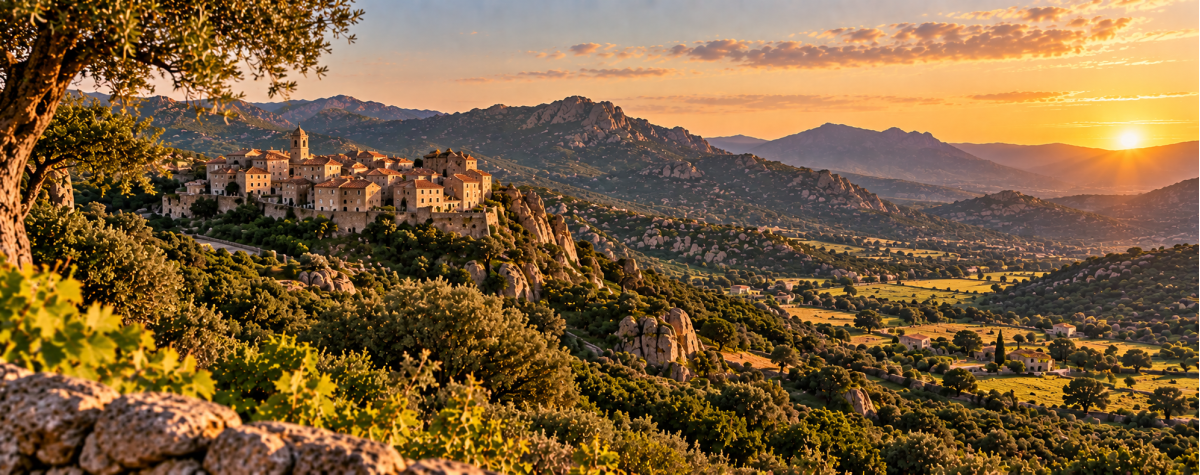
Located in the southwest of the island, between the Ajaccio appellation to the north and Figari to the south, the appellation covers around 180 hectares spread across sixteen communes in the Sartenais and Valinco areas. The vineyard unfolds mainly in the Ortolo valley and around the bay of Tizzano.
At Infinivin, the standout local names have been selected, led by Domaine Saparale, Domaine Fiumicicoli, Domaine Sant'Armettu and Castellu di Baricci.
The Corsica Sartène vineyard is built around two distinct areas: the Ortolo valley to the west, and the bay of Tizzano along the coast. The vines are planted on hillsides that are mostly granitic, with acidic, poor and permeable soils that naturally keep yields low. The climate is dry Mediterranean, with over 2,900 hours of sunshine a year, low rainfall and a wide day-night temperature swing brought on by the nearby mountains (the Cagna massif rises to 1,400 metres).
The appellation showcases Corsica's main native grape varieties. Sciaccarellu brings finesse along with spice and red fruit aromas. Niellucciu, a close relative of Italy's Sangiovese, adds structure and notes of black fruit, undergrowth and tobacco. Vermentinu (Corsican Malvoisie) is the leading grape for whites, giving floral, mineral profiles. Barbarossa, a less common historic grape, rounds out the blend on some reds with fresher notes. Grenache and Syrah can also feature in the blends.
The appellation produces red, white and rosé wine. Corsica Sartène reds are known for their power and structure, with pronounced tannins and notes of black fruit, undergrowth, spice and maquis scrubland. Their cellaring potential typically runs from 6 to 7 years, up to 10 years for the top cuvées. The whites, made from Vermentinu, are full-bodied and aromatic, with green hues and notes of white flowers, citrus and white fruit. The rosés are thirst-quenching and fruity, with a freshness carried by sea breezes.
The four producers cover complementary styles. Saparale and Fiumicicoli embody Sartène tradition with classic blended wines. Sant'Armettu offers a more contemporary approach, with single-plot cuvées such as Rosumarinu and L'Ermite. Castellu di Baricci follows a similar path, with reds that regularly pick up awards at competitions.
Corsica Sartène red pairs with grilled red meat, furred game, wild boar in sauce and aged sheep's milk cheese. The white goes with grilled Mediterranean fish, seafood and fresh cheeses. The rosé suits an aperitif, grilled dishes and Mediterranean cuisine.
Top Wines estates


