Corsican Patrimonio Wine: Our Selection
Patrimonio is the oldest wine appellation in Corsica, recognised as an AOC back in 1968. Cellar-worthy reds, mineral whites and characterful rosés express a rare style here, somewhere between Mediterranean heritage and continental influence. A selection of leading estates, from Gentile to Arena, makes it possible to explore this appellation from every angle.
Patrimonio: A Distinct Appellation on the Isle of Beauty
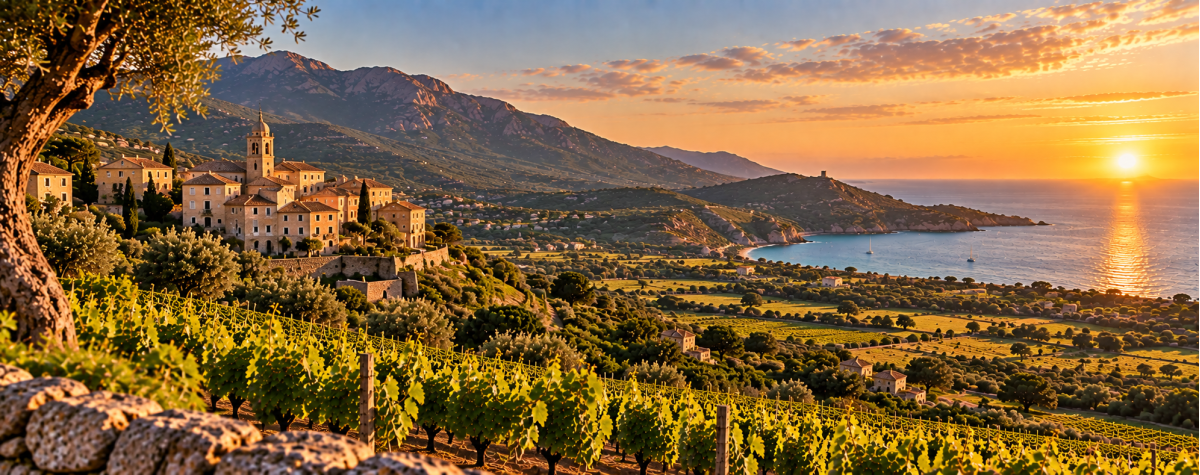
Patrimonio holds a unique place in Corsica's wine landscape. Located at the foot of Cap Corse, around the Gulf of Saint-Florent, the appellation covers the Nebbio region, a name that comes from the fog that regularly settles over the area.
What sets Patrimonio apart from Corsica's eight other appellations comes down to the soil first. Most of the island's terroirs sit on granite or schist. Patrimonio, on the other hand, has clay-limestone soils, unique on the island, alongside some schist and granite zones locally. This geological quirk gives the wines a distinct structure, often tighter, with a pronounced minerality that stands apart from the sunnier profile found elsewhere on the island.
The vineyard area remains modest in size, split between many small family-run estates, which explains why the appellation is home to producers with limited volumes but a solid reputation, both on the French mainland and internationally.
Patrimonio is just one of the expressions of the Corsican wine region. South of the Gulf of Saint-Florent, the Ajaccio appellation works with Sciaccarellu. Further west, the Balagne region brings together the wines of Corse Calvi. To the southwest lies Corse Sartène, at the southernmost tip of the island Corse Figari, and on the steep terraces of the northern point, Muscat du Cap Corse holds a special place as the island's only naturally sweet wine.
The grape varieties and colours of Patrimonio
Patrimonio is produced in all three colours, with a fairly balanced split between red, white and rosé, which is not always the case in Corsica, where rosé often dominates by a wide margin.
Niellucciu is the appellation's flagship grape. A close relative of Tuscan sangiovese, it must make up at least 90% of red blends and 75% of rosé blends. It produces wines that are tannic in their youth, with black and red fruit aromas, and that gain complexity after a few years in bottle. Grenache and Sciaccarellu play a supporting role, adding roundness and aromatic freshness.
For whites, Vermentinu (also known as Corsican Malvoisie) is the only grape variety allowed. It produces dry wines, often marked by notes of white flowers and fruit, with a mineral tension typical of the limestone soil. This same Vermentinu also plays a supporting role in some rosés and reds, alongside Niellucciu.
How to Choose a Patrimonio Wine
The right choice mainly depends on how the wine will be used. A young Patrimonio red, within its first two to three years, works well for straightforward drinking, alongside grilled meats or Corsican specialities like charcuterie or sheep's milk cheese. Beyond that point, the more structured cuvées develop real cellaring potential, sometimes beyond ten years for the best bottlings, a strength few Corsican wines can claim with the same consistency.
Patrimonio white, made from Vermentinu, is generally best enjoyed young, within two to three years of harvest, to make the most of its freshness and fruit. It pairs naturally with grilled fish, seafood and fresh Corsican cheeses like brocciu. Some more elaborate cuvées, aged for longer, can hold up for a few extra years in the cellar too.
Patrimonio rosé, often made with a high proportion of Niellucciu, stands out for a fuller-bodied profile than the average Mediterranean rosé. It's best served cool but not ice cold, around 10 to 12°C, so as not to mask its structure.
A useful tip for buyers less familiar with the appellation: the estate name on the label often matters more than the vintage. Patrimonio's small properties produce limited volumes, and quality consistency can vary noticeably from one producer to the next. Sticking to well-established estates remains the safest way to avoid disappointment, especially since the appellation, given its limited output, isn't widely available outside specialist wine shops.
Leading Estates
Domaine Gentile: founded in 1970 in Saint-Florent, this family-run estate grows Niellucciu, Malvoisie and Muscat Petits Grains across 30 hectares. Recognised internationally, it produces reds, whites and rosés true to the appellation's character.
Domaine Arena: run by three members of the same family (Antoine, Jean-Baptiste and Antoine-Marie Arena), this estate farms hand-shaped plots on limestone soil. Its cuvées, often made using biodynamic methods, rank among the most sought-after in Patrimonio.
Clos Teddi: set on granite arena soils, this estate produces around 120,000 bottles a year across several ranges, from the easy-drinking Tradition cuvée to more structured, cellar-worthy bottlings.
Domaine Giacometti: set on a terroir unusual for the appellation, clay-granite rather than limestone, this estate produces several cuvées under the Patrimonio AOP, with reds built for cellaring alongside whites and rosés made for more immediate drinking.
The character of the appellation lends itself just as well to a one-off discovery, through a single bottle, as to a deeper exploration across several estates, given how much profiles vary from one property to the next despite shared grape varieties.
Frequently Asked Questions
What sets Patrimonio apart from other Corsican appellations?
Patrimonio is the only Corsican appellation built mainly on clay-limestone soil. It's also the island's oldest AOC, recognised in 1968.
Which grape variety dominates Patrimonio reds?
Niellucciu, which must make up at least 90% of red blends. Grenache and Sciaccarellu can be added in smaller proportions.
Is it worth focusing on a particular estate to discover the appellation?
Production remains split between small properties, with noticeable quality differences from one estate to the next. Sticking to recognised names like Gentile, Arena, Clos Teddi or Giacometti is the most reliable approach for a first exploration.
Filters
Sort
Top Wines estates


