Unit price
€23.90
Delivered in 24h/ 48h
Need help? +33 (0)4 94 23 68 35
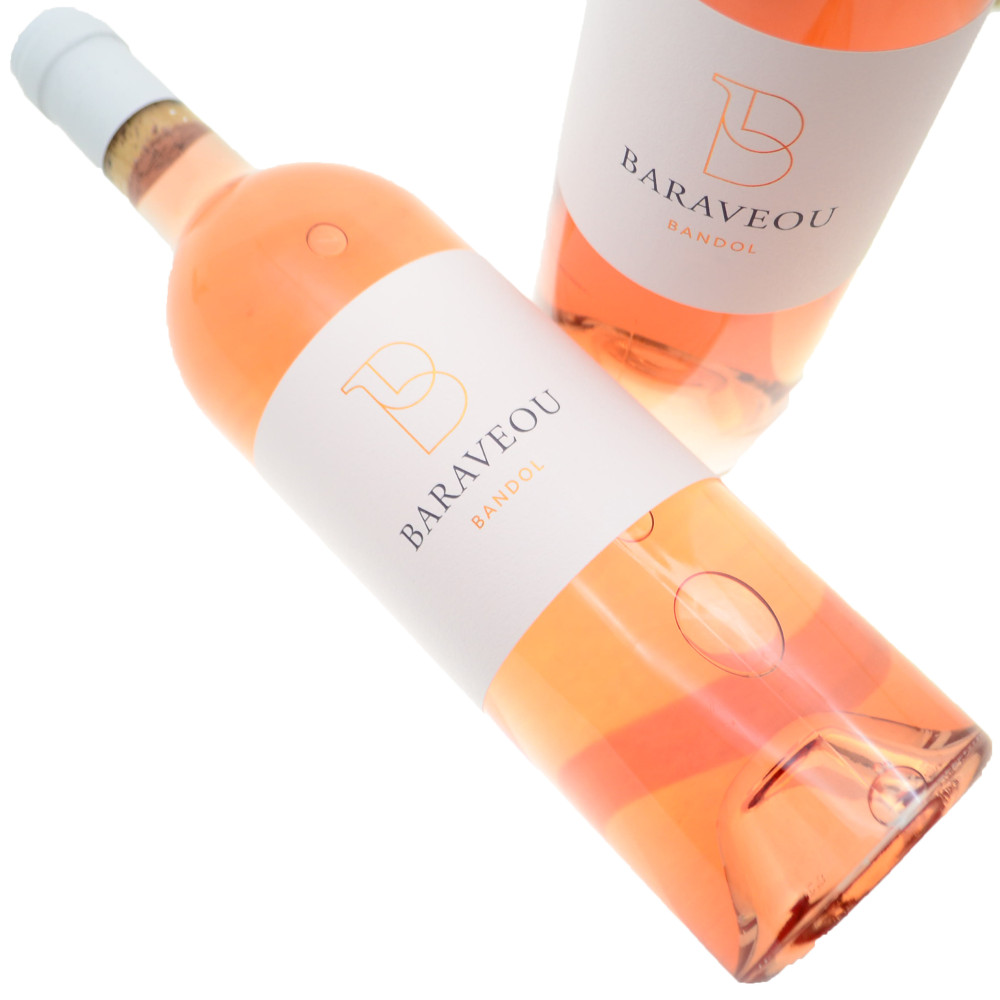
Domaine Baravéou crafts its Bandol Rosé around Mourvèdre, complemented by Grenache, Cinsault and a touch of Carignan, from organically farmed terraced vineyards in La Cadière-d’Azur and Le Castellet. This macerated rosé has genuine substance, combining grapefruit, strawberry and floral nuances with a vibrant, saline and delicately structured palate. More gastronomic than simply summery, it can be enjoyed for its youthful energy or allowed to develop for several years in the cellar.
The sommelier info
The nose opens with fresh notes of pomelo and strawberry, intertwined with rose and honeysuckle. The Mourvèdre is still young, but already reveals a lovely floral complexity.
On the palate, it offers ripe, crisp fruit, supported by a particularly savory salinity. A very light tannic structure adds depth and structure without making the wine harsh. The finish retains freshness and finesse, with enough structure to pair well with elaborate cuisine.
This wine is served with
Domaine Baravéou Bandol Rosé pairs beautifully with fennel-grilled red mullet, bouillabaisse, prawns flambéed with pastis, Provençal herb-roasted lamb or slow-cooked ratatouille; serve at around 11°C without over-chilling and allow a few minutes in the glass for its structure and floral nuances to unfold.
Domaine Baravéou Bandol Rosé 2025 in details
Frequently purchased together
The domain
Located in La Cadière-d'Azur, in the heart of the Provence vineyards, Domaine Baravéou is an estate created in 2011 by winegrower Jean-Philippe Fourney. Its vines extend between La Cadière-d'Azur and Le Castellet, two emblematic communes of the Bandol AOP. Farmed with a particularly respectful approach to both soils and vines, the estate places Mourvèdre, the appellation's essential grape variety, at the heart of its production and produces both red and rosé wines.
Domaine Baravéou was created in 2011, when Jean-Philippe Fourney began restoring old vineyard terraces in La Cadière-d'Azur. The winegrower notably replanted Mourvèdre and Grenache using massal selections and also works vines located in the neighbouring commune of Le Castellet. The estate's first wine was produced a few years later, in 2015.
The project developed around a strong ambition: to intervene as naturally as possible in the vineyards in order to allow the terroir and grape varieties to express themselves. The plots are laid out in restanques, the terraces characteristic of many Mediterranean winegrowing landscapes. Harvesting is carried out by hand and part of the soil work is performed using animal traction, particularly during autumn and spring ploughing.
This approach allows Baravéou to offer a distinctive expression of Provence wines, with deliberately limited production focused on two colours.
The vineyards of Domaine Baravéou are spread between La Cadière-d'Azur and Le Castellet, with different soils depending on the plot. In La Cadière, the estate notably works with red clay soils and Triassic formations, while the plots in Le Castellet lie on limestone marl and sandstone.
Mourvèdre plays a predominant role in the estate's vineyards. A grape variety particularly associated with the Bandol vineyard, it is complemented notably by Grenache and Cinsault. This predominance of Mourvèdre is particularly evident in the estate's red wine, produced to retain depth, freshness and finesse in its tannins.
The vines are cultivated according to the principles of organic farming. The estate notably favours mechanical or animal-powered soil cultivation, cover crops and treatments based on phytotherapy. This philosophy naturally places Baravéou among the organic wines selected by Infinivin.
Domaine Baravéou's production is focused on two cuvées, one red and one rosé, both from the Bandol terroir. This deliberately concise range allows Jean-Philippe Fourney to offer two different expressions of his grape varieties and vineyard plots.
Baravéou red wine is made with a strong predominance of Mourvèdre. The grapes undergo gentle extraction before ageing in large oak casks for around 18 months. The estate thus seeks silky tannins and a texture that remains approachable in its youth, without sacrificing the ageing potential characteristic of the appellation's great red wines.
Baravéou rosé wine, meanwhile, is conceived as a true gastronomic rosé. Made by maceration from Mourvèdre, Grenache and Cinsault among other varieties, it is aged in tanks for around six months. The estate seeks greater structure than that of a simple aperitif-style rosé, while retaining freshness and balance.
Through these two cuvées, Domaine Baravéou offers a highly personal interpretation of the Bandol vineyard, shaped by Mourvèdre, the cultivation of vineyard terraces and a viticultural approach favouring limited intervention both in the vineyard and in the cellar.