Unit price
€26.90
Delivered in 24h/ 48h
Need help? +33 (0)4 94 23 68 35
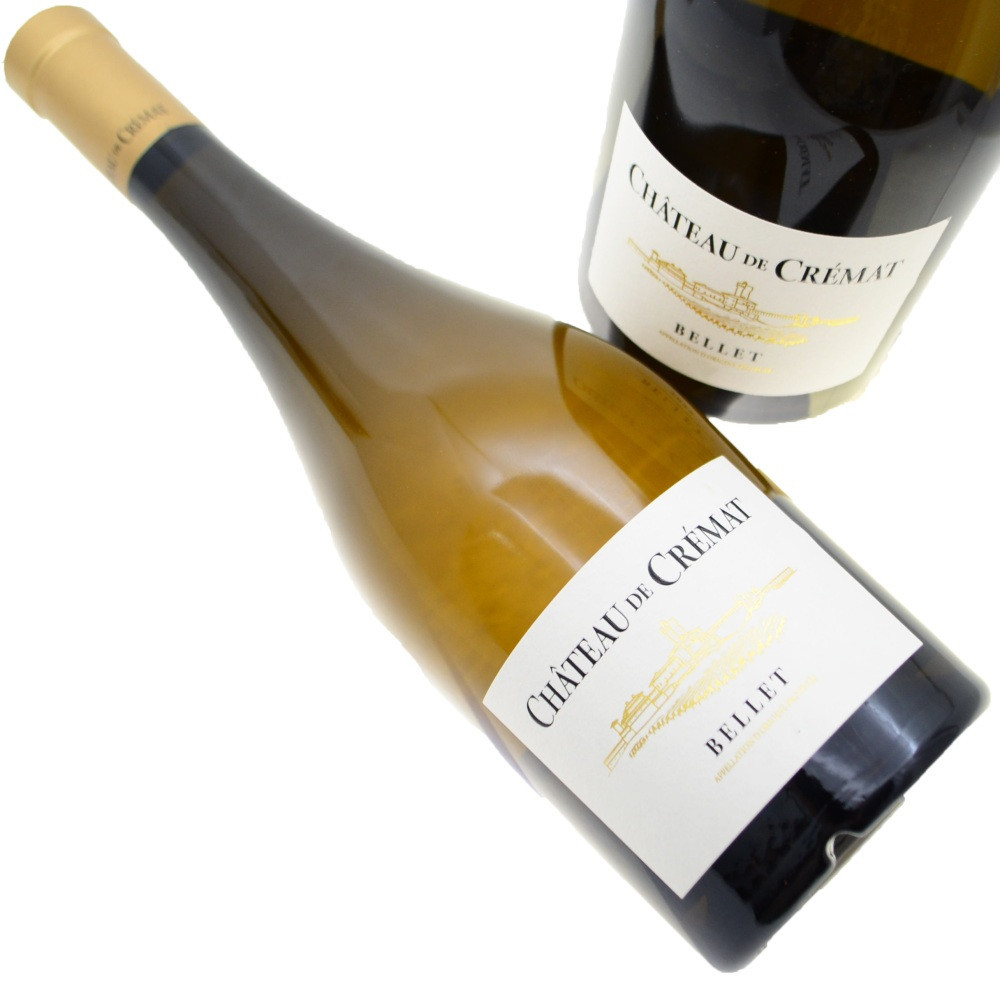
Château de Crémat Blanc combines 95% Rolle and 5% Chardonnay, organically grown on the siliceous-limestone “poudingue” soils of the hills above Nice. Twelve months of ageing in stainless steel, demi-muids and stoneware eggs bring depth to notes of white peach, clementine, flowers and saline nuances, with a fresh, mineral palate. Already elegant today, this Bellet has an ageing potential of 5 to 10 years, allowing greater complexity to develop over time.
The sommelier info
The nose displays lovely complexity centered on white peach and clementine, accompanied by salty and delicately toasty nuances. Aging enriches the aromatic expression without overshadowing the Rolle’s fruity character.
White-fleshed fruits blend with floral and citrus notes on a full-bodied yet fresh palate, supported by a lingering mineral quality. The finish retains plenty of energy and hints at the wine’s aging potential.
This wine is served with
Château de Crémat Blanc pairs beautifully with roasted scallops, orange zest and Jerusalem artichoke purée, grilled lobster, sea bass with fennel or chicken with morels; serve between 10 and 12°C and open approximately thirty minutes before serving.
Château de Crémat White 2024 in details
Frequently purchased together

The domain
On the hills above Nice, Château de Crémat is one of the historic estates of the Bellet AOP, a small and confidential appellation located on the slopes around Nice, between the Mediterranean and the Alpine foothills. Built at the beginning of the 20th century, the château is now inseparable from the history of this small vineyard. The estate produces red, white and rosé wines from Mediterranean and local grape varieties such as Folle Noire, Braquet and Rolle.
Although the site's winegrowing history goes back much further, it was in 1906 that Antoine Mari, a wine merchant from Nice, had Château de Crémat built on the family land known as “Li Plana de Mari”. In the 1920s, the estate passed into the hands of Irène Bretz, a wealthy American who undertook major renovation work with Charles Dalmas' architectural firm and turned the château into one of the places frequented by high society on the French Riviera.
In the 1940s, Pierre Tomé became the owner of the château and played an active role in the recognition of the Bellet vineyard. As president of the winegrowers' association, he contributed to the recognition of the appellation in 1941. Several owners subsequently succeeded one another at the head of the estate.
At the beginning of the 21st century, Cornelius Kamerbeek undertook a major restructuring of the vineyard and modernised the winery. At the same time, the estate committed to organic farming and obtained certification in 2014. Since 2017, Château de Crémat has belonged to a family of French industrialists who are continuing the restoration of the property and the development of its winegrowing activities.
The Château de Crémat vineyard lies on the slopes west of Nice, within one of the region's most confidential winegrowing areas. It benefits from Mediterranean sunshine, altitude and the influence of both winds and sea breezes.
The siliceous-limestone soils characteristic of the appellation notably contain “poudingue”, a rock composed of rounded pebbles, sand and mineral particles. The vines grown on these slopes allow the estate to express a very distinctive facet of Provence wines. Infinivin also places Bellet within its Provence wine category structure.
Château de Crémat works with several emblematic grape varieties of the Nice vineyard. Folle Noire is notably used for the reds, while Rolle, also known as Vermentino, plays a central role in the whites. Braquet, a grape variety closely associated with the Bellet vineyard, contributes to the identity of the rosés. These local varieties are also grown alongside more widely planted Mediterranean grapes.
Château de Crémat expresses its terroir through all three colours. The red wines notably highlight Folle Noire, a historic grape variety of the Nice vineyard. It produces wines that are structured, fruity and spicy, reflecting the distinctive identity of this Mediterranean terroir.
For its white wines, the estate relies mainly on Rolle. This grape variety, particularly widespread in southern France, finds favourable conditions on the slopes around Nice for expressing freshness, floral and fruity notes and a certain minerality.
Braquet plays an important role in the production of the estate's rosé wines. This local grape variety, particularly associated with Bellet, allows Château de Crémat to produce rosés firmly rooted in the winegrowing identity of Nice. The three colours therefore make it possible to explore different expressions of the same terroir without losing the distinctive characteristics of the appellation's historic grape varieties. The production of all three colours and the use of Rolle, Folle Noire and Braquet are consistent with the characteristics of Bellet presented by Infinivin.
Organic viticulture is also part of the recent development of Château de Crémat. The estate committed to this approach during the restructuring of the vineyard undertaken at the beginning of the 21st century, obtaining certification in 2014.
This direction complements the work carried out on the estate's grape varieties and terroir. Château de Crémat wines therefore naturally find their place among the organic wines selected by Infinivin, while retaining the distinctive identity of this vineyard located on the outskirts of Nice.


